The millenium (Ch. 20)
Chapter 20.
Overview
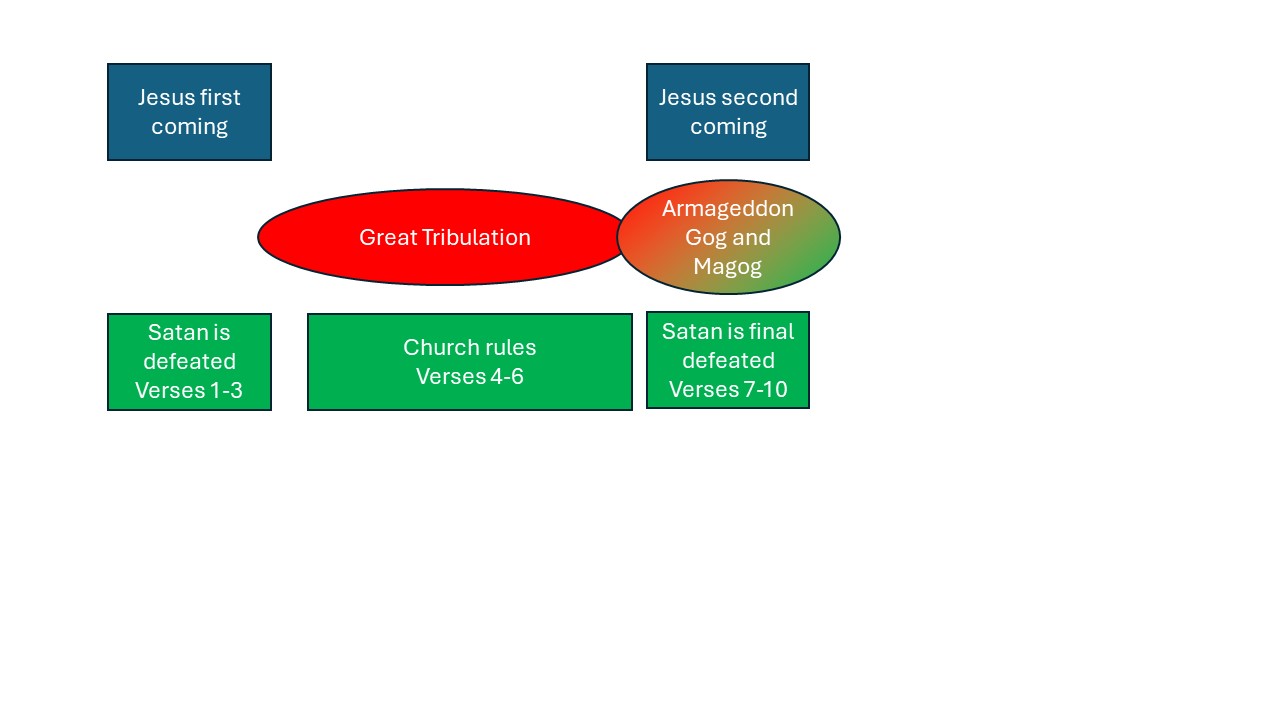
The “thousand years” has generated more debate than almost any other detail in the book - and it’s worth knowing upfront that sincere Christians read this chapter differently (before Christ’s return, after it, or symbolically). Here is one reading, offered as one attempt among several serious ones, not the final word:
- The vision opens with Satan bound at the cross - Jesus’ own victory, not a future event.
- That binding gives the church room to share the gospel. The church reigns during this time - but not the way earthly kingdoms rule.
- Satan is then released for one last confrontation, pictured through the imagery of Gog and Magog’s final assault.
- Only then comes the resurrection and final judgment, before everyone spends eternity either with God or without him.
On this reading, the thousand years is another way of naming the whole age between Christ’s first and second comings - and its point isn’t a victim mentality but confident, active testimony. The rest of the book has already spent many chapters showing that the church rules without violence, fear, or manipulation. Even acting from apparent weakness, the church reigns.
Two details worth explaining
Why “beheaded” (Revelation 20:4)? In the Roman world, execution by torture over a long time was the common death sentence - a quick death by beheading was a privilege reserved for nobility and kings. Naming the martyrs this way is a quiet but deliberate statement: in their deaths, they were treated as royalty.
What are the “first” and “second” death and resurrection (Revelation 20:5-6)? The first refers to ordinary physical life and death; the second describes a further, spiritual reality - a life so completely renewed that it counts as a second resurrection, and a death so final it counts as a second death.
Key images
- The first resurrection - the reign of those who died faithful, sharing Christ’s rule now, before the bodily resurrection at the end.
- The lake of fire - the final exclusion from God’s presence, the “second death” the letters promised the faithful would never taste.