The harlot (Ch. 17-19)
Chapter 17, 18, and 19.
Unmasking the harlot
Just as the seals and trumpets each had a supplementary vision, this section supplements the bowls, gathering everything evil we’ve seen so far into one complex image: a harlot named Babylon, riding a beast that controls the kings of the earth, manipulating rulers and killing the saints.
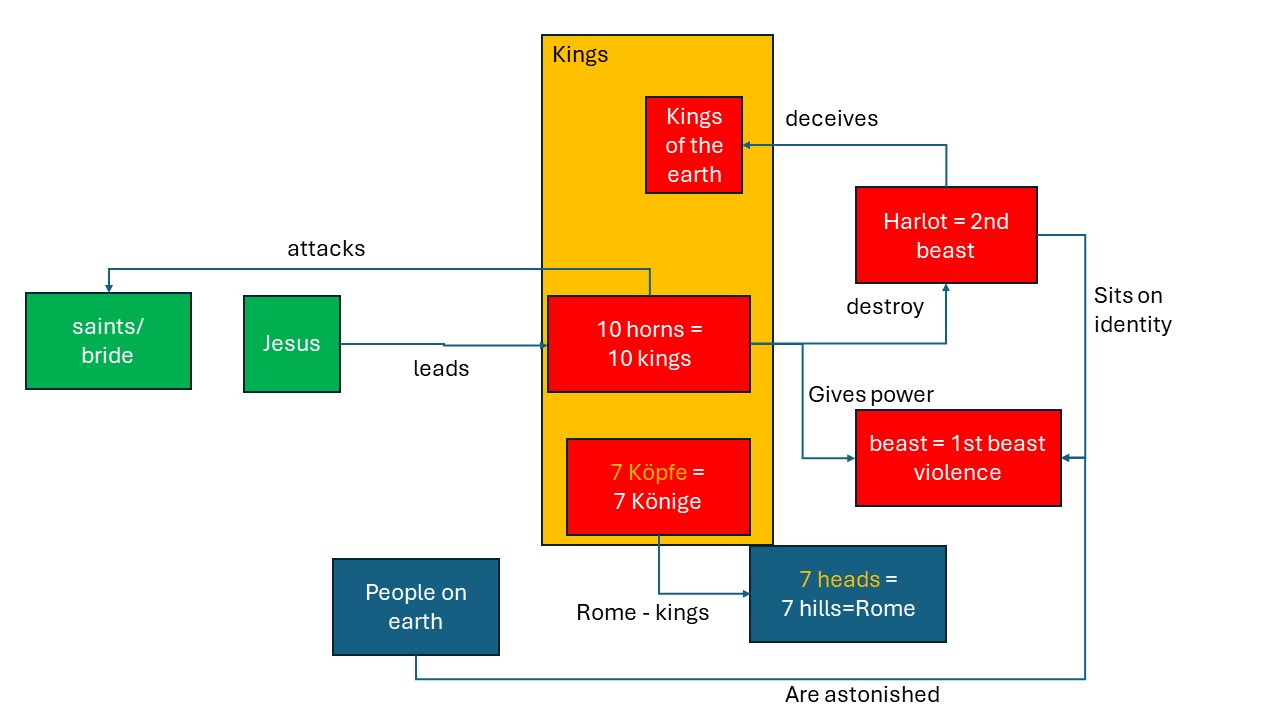
It looks unstoppable - but the same beast that seemed invincible in chapter 13 is now openly mocked as unreliable, a fading imitation next to the God who truly “is, and was, and is to come” (Revelation 1:8). Neither beast nor harlot ultimately triumphs over the saints; instead, the very kings who empowered the beast turn and destroy the harlot themselves - because God has planned it that way all along.
The harlot is the dark counterpart to the Bride of Christ (the church), representing economic and financial power dressed up to look attractive - close enough to the bride’s own appearance that believers looking for an easier, more prosperous path could mistake her hospitality for legitimate blessing.
Her impact and her judgment
Underneath the surface, the harlot is behind the injustice of the third seal’s famine: scarcity for the poor alongside untouched luxury for the wealthy, treating people as commodities. There’s nothing wrong with prosperity itself - God gives it too - but when it matters more than God, that’s citizenship in Babylon, not the New Jerusalem. A church that only wants comfortable blessing, without the cost of witness, has quietly become the harlot’s guest rather than the bride.
When Jesus intervenes, it’s the harlot - not the church - who becomes the target, judged by the very kings who once served the beast. Proud and certain of her own security, her downfall comes suddenly, exactly as it did for historical Babylon, and in the same measure she dealt out to others.
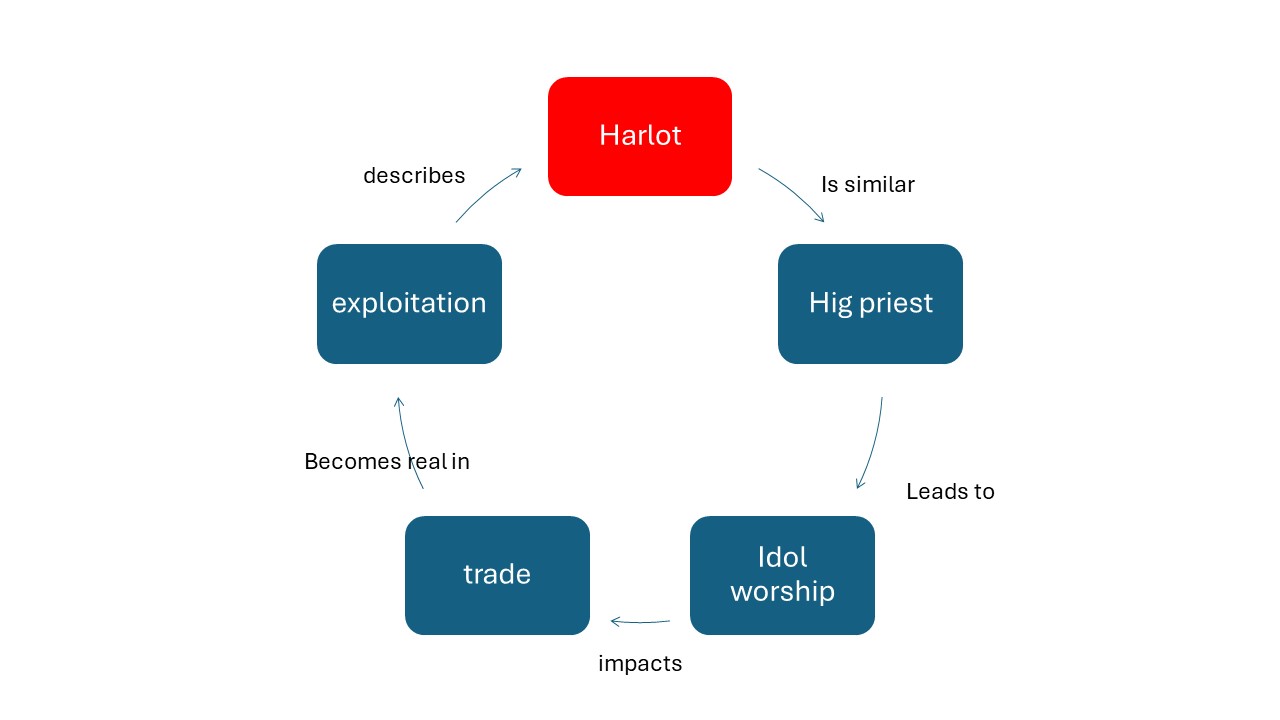
Why does the book spend more than two chapters on her? Because being “part of” the harlot (Revelation 18:4) - trading faithfulness for wealth, the way idolatry and commerce were linked in the Old Testament - reshapes how we treat people, from love toward exploitation.
And now?
With the harlot judged, the bride is finally ready for her wedding. First, though, Jesus finishes off what remains of the beast and the false prophet - not with a battle, but with a courtroom: a sword from his mouth, judging each in turn.
Key images
- The scarlet beast, seven heads, ten horns - the empire that carries her — the heads are its rulers one after another, the horns the client kings who lend it their power.