The seals (Ch. 6)
Chapter 6.
The four horsemen
Now that Jesus has been shown worthy to open the scroll, one thing needs to happen first: exposing the one who claims the same authority - Satan.
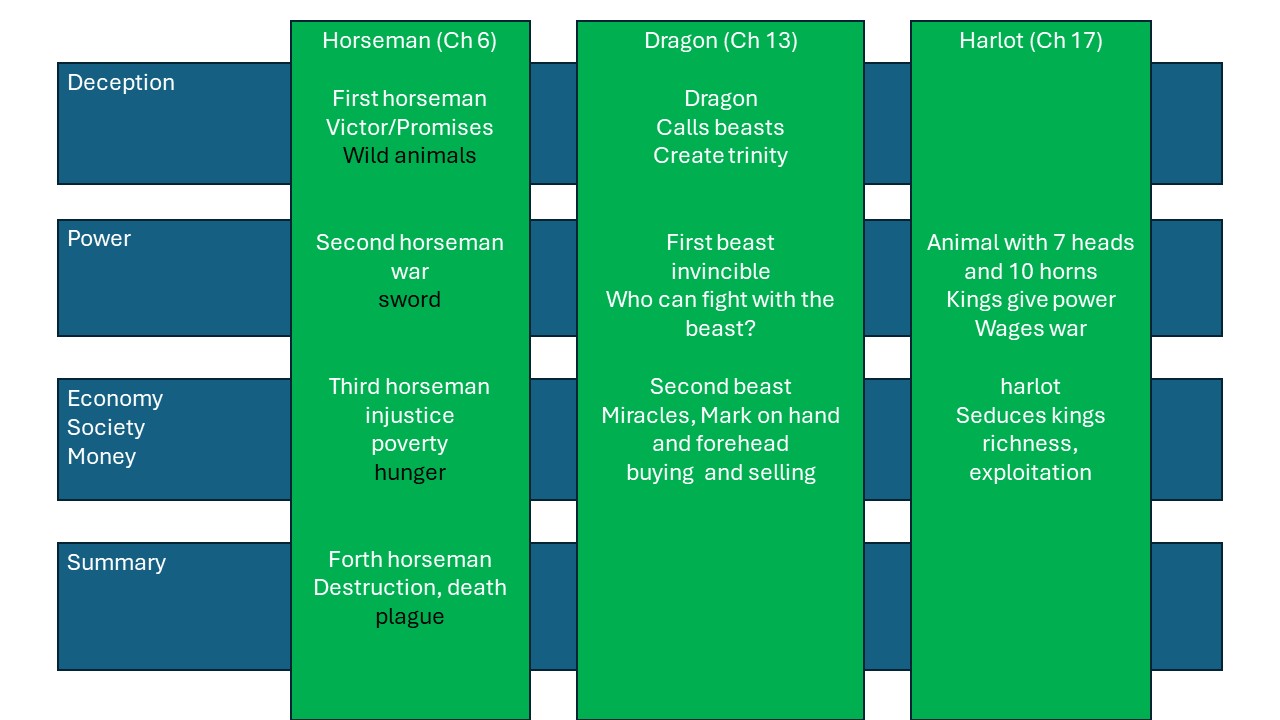
The first four seals do exactly that. Satan’s rider shows up first on a white horse, looking triumphant, crowned, full of promise - but as the seals continue, the same rider is revealed to bring war, then economic hardship for the poor while the wealthy stay untouched, then death and destruction. Together the four horsemen echo the four judgments God warned of through the prophets: wild beasts, sword, famine, plague - and the first horseman’s borrowed white horse and crown already hint at the beast who will appear later wearing the same disguise.
Satan has nothing real to offer - only imitation. This is the first appearance of a counterfeit trinity that recurs through the book: the same three-part pattern shows up again in chapter 13 with the dragon and two beasts, and again in chapter 17 with the harlot and the beast - each time exposing the same empty imitation of Christ’s real power.
The souls under the altar
The fifth seal opens on the souls of martyrs crying out from under the altar: “How long, Sovereign Lord, until you judge the inhabitants of the earth?” These are believers who saw through Satan’s counterfeit and paid for it with their lives. They’re given white robes - Jesus’ own verdict that they were right - and told to wait a little longer, while others still haven’t yet seen what they’ve seen.
That’s the book’s ongoing tension: the longer this age lasts, the more people have the chance to recognize the truth and turn to Jesus - but the longer it lasts, the longer the faithful keep suffering for a truth others haven’t grasped yet.
When it ends
The sixth seal shows that ending will come, decisively - not a drawn-out struggle but a dramatic, final act. People everywhere are terrified of “the wrath of the Lamb,” though the text leaves open exactly why: their own guilty conscience, simple fear of real power, or the assumption - based on Satan’s counterfeit - that Jesus will deal with them the same way the beast would have.