The trumpets (Ch. 8-9)
Chapter 8 and 9.
Prayer sets the trumpets in motion
After the seventh seal, heaven falls silent - in Jewish tradition, the moment God listens closely to the prayers of his people. That’s exactly what happens next: angels ready to blow their trumpets, but wait for the prayers of the saints to be offered first. The trumpets are set in motion by prayer, the same way the seals were set in motion by Jesus’ death on the cross. It’s a striking statement about what prayer actually accomplishes.
What the trumpets do
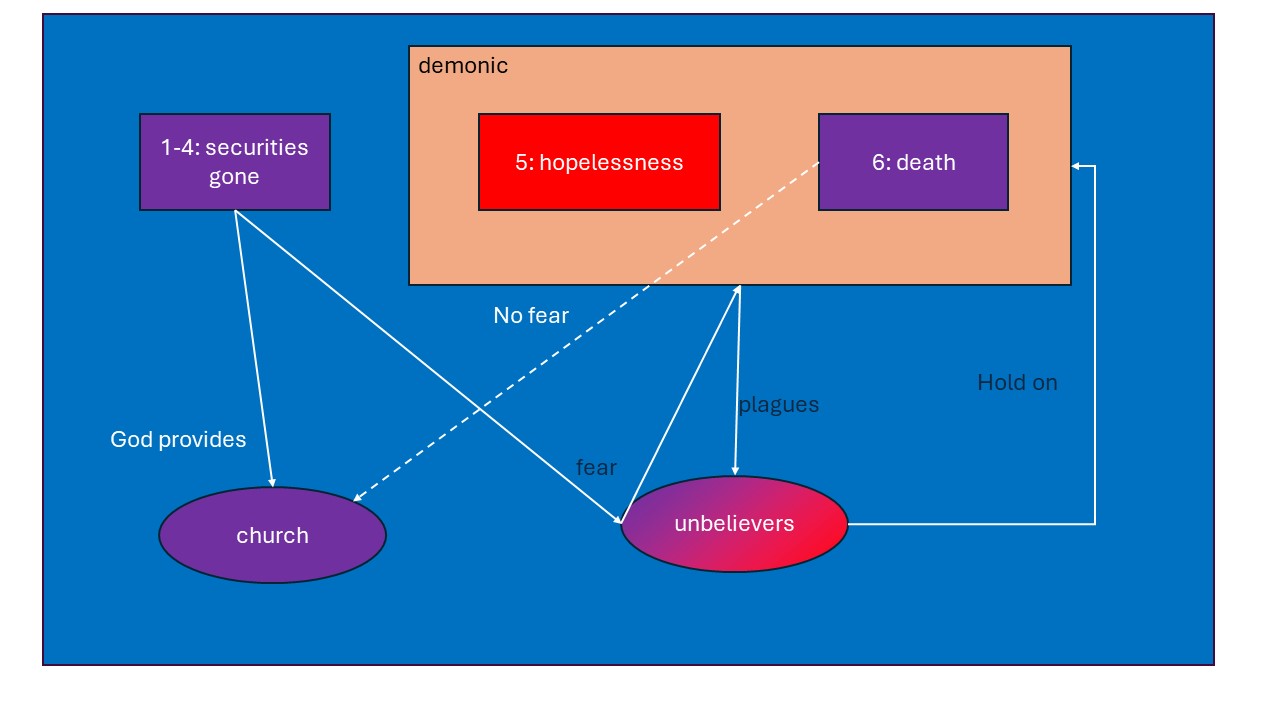
Modeled closely on the plagues of Egypt, the first four trumpets strip away the ordinary securities people rely on: water, food, natural order, trade and economy. The next two, driven by demonic forces, go further still: peace of mind and hope, then life itself.
Here’s the surprising turn: rather than only hardening people further, Revelation describes a genuinely mixed response - real, if partial, movements toward repentance run alongside continued defiance, especially among those still clinging to the very idols that just failed them. Judgment alone rarely changes a heart completely, but it isn’t presented as a dead end either - it’s one more appeal, alongside everything else in the book, to let go of false securities before it’s too late.
Meanwhile, the church - already sealed in chapter 7 - is specifically excluded from the fifth trumpet’s torment (Revelation 9:4-6). That doesn’t mean an easy ride: believers still lose the same securities, and some lose their lives. But enduring that loss without losing hope becomes exactly the kind of testimony that shows a watching world what real security looks like.
Key images
- The abyss - the prison of the powers hostile to God, opened only by his permission.
- Abaddon, Apollyon - Hebrew and Greek for “Destroyer” — the king of the locusts, named so that no one mistakes what he does for help.