Worship (Ch. 4-5)
Chapter 4 and 5.
The answer to every problem in chapters 2-3
Before anything else happens, John is given a glimpse into heaven’s throne room - and it’s the answer to everything the seven churches were struggling with. God is not panicking. Everyone and everything in the room finds its true place in relation to him, and all give him glory, laying down whatever claims to status they might otherwise hold onto.
That kind of worship is the real cure for what ailed Ephesus, Sardis, and Laodicea: knowing God rightly protects against wrong teaching and against a distorted view of ourselves, and full submission to him is what lets a church trust his provision and take real risks for him, the way Smyrna and Philadelphia already were.
Where the plagues come from
Strikingly, every plague that follows in the rest of the book - seals, trumpets, bowls - originates from this same throne room, filled with worship. That can be hard to square with the devastation to come, but it’s worth holding onto as the plagues unfold: everything that follows comes from the same throne surrounded by mercy, not from a different, harsher source.
The scroll only one can open
The scroll sealed seven times (Revelation 5:1-5) would have been a familiar legal object to John’s first readers: a document sealed by witnesses, its contents summarized on the outside, which becomes legally active - like a will or a decree - once opened. The question of who is “worthy” to open it isn’t about who is allowed to read it, but who is authorized to execute it - it appears to be nothing less than God’s own plan for history.
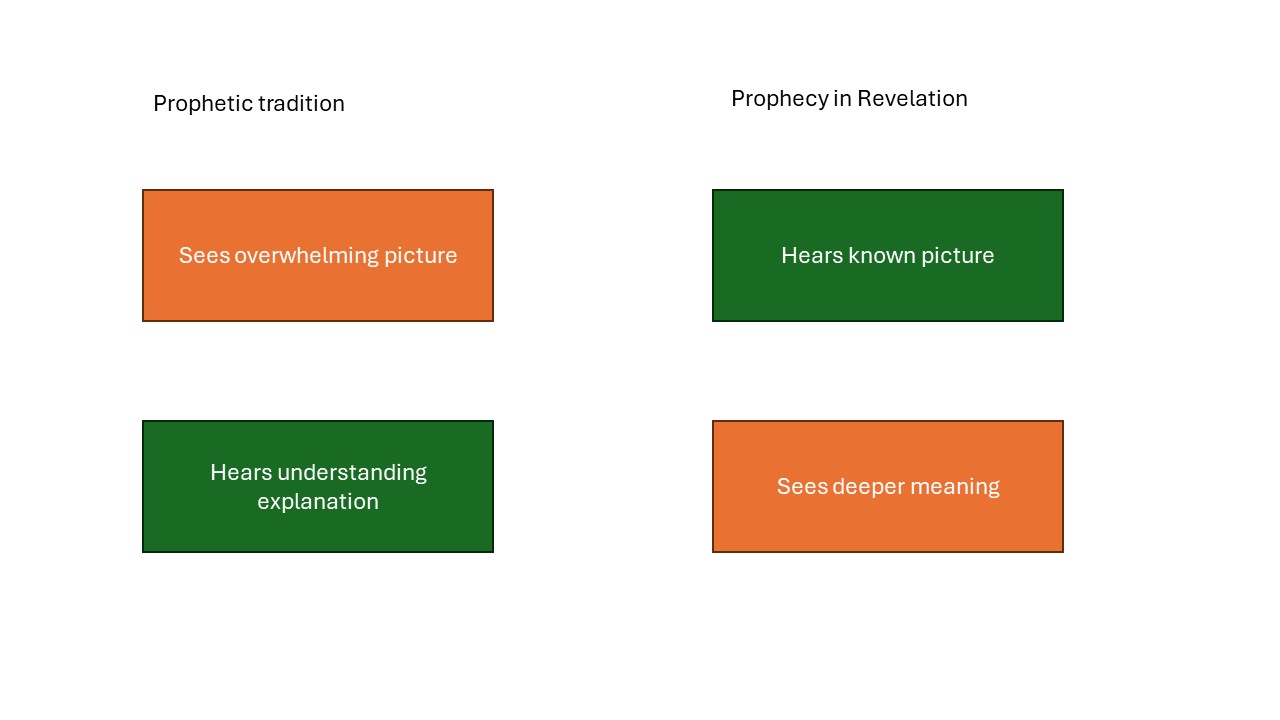
No one is found worthy - until John is told the Lion of Judah has triumphed. But when he turns to look, what he sees is not a lion at all: a Lamb, looking as if it had been slain. John hears one thing and sees another that reinterprets it entirely - the conquering Messiah everyone expected turns out to conquer through sacrifice. The same hear/see pattern repeats later with the 144,000 (chapter 7): announced as an army, revealed as a worshiping multitude.
Key images
- The twenty-four elders - the whole redeemed people pictured in heaven — twelve tribes and twelve apostles, both testaments together; the number recalls the twenty-four orders of priests David appointed.
- The four living creatures - all of creation represented before the throne, keeping watch and leading its worship.
- The seven spirits - the fullness of God’s Spirit, sent out into the whole world.